Agenda | Mountain Daylight Time
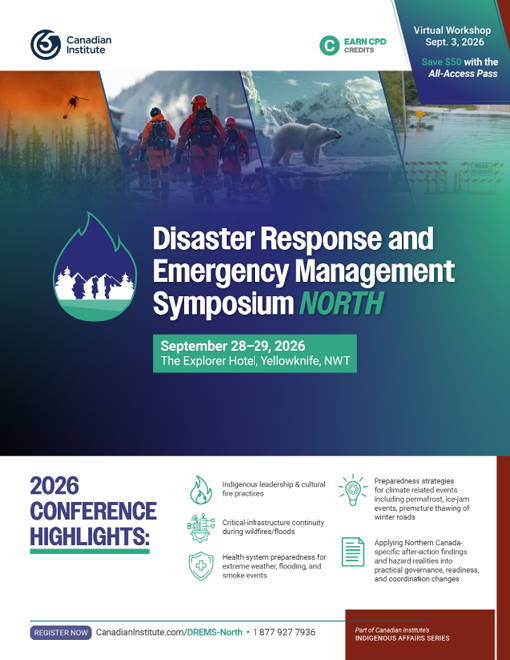
Flip through our conference brochure and discover what’s new this year.
Download Brochure
Day 1 — Main Conference
September 28, 2026


Opening Remarks from The Canadian Institute


Virginia SarrazinPractice Lead, Climate Risk and ResilienceWSP

Colin XanderPresident and FounderPromise for the North Charities
Geographic isolation, seasonal roads, and extreme weather issues are just a few of the logistical challenges in northern Canada. Winter storms caused regular closures of the Inuvik Tuktoyaktuk Highway in 2025 and 2026, significantly impacting travel plans for many residents. Topics of discussion will include:
- Integrating advanced technology to enhance connectivity in remote communities in Canada.
- Incorporating advanced weather forecasting tools to avoid potential disruptions due to extreme weather events
- Strengthening resilience of critical infrastructure against permafrost impacts, winter access disruptions, and supply chain fragility
Virtual Break

Sarah WilkinsonSenior Policy AnalystPublic Safety Canada
The Canadian Centre for Recovery and Resilience (the Centre), an initiative between Public Safety Canada and the Institute for Catastrophic Loss Reduction, is advancing the knowledge and best practice of disaster recovery in Canada. In this interactive session, attendees will learn how pre-disaster recovery planning can strengthen municipal resilience and support faster, more effective recovery. The session will highlight key steps in the planning process, demonstrate practical tools and guidance available through the Centre, and showcase the dedicated support available to municipalities looking to build their recovery readiness.
Topics of discussion will include:
- Understanding the value of pre-disaster recovery planning
- Exploring key components of recovery planning
- Learning about the tools, resources, and supports available through the Centre

Kerri HolmesDirector, Industrial & Emergency ManagementTransitional Solutions Inc.

Nick MauroCEOYukon First Nations Wildfire

Joshua MitchellSenior Advisor Indigenous Fire Policy, Northern Forestry CentreNatural Resources Canada-Canadian Forest Service

Stephanie YuillTaiga and Tundra Region, CoordinatorWildfire Resilience Consortium Canada (WRCC)

Alesi Zito-LaRoseEmergency Program Manager and EPCCentral Okanagan Emergency Management
With 2023 and 2025 being two of the largest wildfire seasons in Northwest Territories’ history, and Canada experiencing two of the worst wildfire seasons in Canadian history in the last 3 years, wildfire management and mitigation are becoming essential for health system preparedness and critical infrastructure continuity. Recognizing some key lessons learned, an After-Action Review of the Government of Northwest Territories’ emergency response to the 2023 wildfire season was conducted with the final report being released in May 2025. The Government of Northwest Territories is working closely with local leaders to implement the key findings of the report for a more resilient Northwest Territories. Topics of discussion will include:
- Incorporating Indigenous knowledge to assist with understanding local risks
- Expanding operational hours to minimize the impacts of round-the-clock fire-friendly conditions
- Building capacity to support Indigenous firefighters and community-led solutions
- Utilizing fire retardants safely to minimize environmental impacts
- Collaborating with Indigenous governments through the Council of Leaders to support long-term improvements
Lunch Break
Coordinating Efforts: Enhancing Disaster Response Communication for Remote Communities and Vulnerable Populations

Alanna BurtonDirector, Indigenous and Community Resilience ProgramsNikaanii Consulting Inc.

Megan NarsingCommunications SpecialistMegN Communications
Disaster response communication can be challenging in northern Canada due to its large land mass and lack of connectivity often making it difficult to reach remote communities. Adding to the complexity is that a coordinated system from the federal level does not exist in Canada, occasionally leading to ambiguity and confusion when an evacuation order is declared. Topics of discussion will include:
- Examining new communication frameworks that may help support northern communities with more effective evacuations
- Enhancing collaboration for emergencies beyond municipalities that require a coordinated response
- Discussing Indigenous-led communication strategies to address historical trauma and the fear of displacement
- Establishing robust communication protocols to prevent communication breakdown during evacuation and emergencies

Ian FloodDirector, Energy North OperationsNorthwest Territories Power Corporation
As extreme weather events affected infrastructure across the territories in 2026, maintaining and restoring power during outages is becoming more challenging than ever. As wildfires become more unpredictable, and ice buildup from winter storms affects power lines, emergency level response plans are essential to minimize community impacts. Topics of discussion will include:
- Ensuring resilient electricity supply during extreme weather conditions
- Planning for business continuity from the beginning
- Building greater energy system resilience in remote northern communities
- Upgrading ageing infrastructure to minimize outages
- Installing aqua dams to prevent flooding
Virtual Break

Andrew HarknessSenior Principal / Climate Solutions LeaderStantec

Matthew PittanaClimate Scientist & Risk SpecialistStantec

Lexy RelphTeam Lead, Climate Risk and ResilienceStantec
Climate-related disasters are no longer isolated incidents, they are ongoing threats to Canada’s safety, economy, and infrastructure. From wildfires in the Northwest Territories and Alberta to floods that have crippled wastewater and drinking water systems, extreme weather events are exposing critical vulnerabilities across public assets. When wastewater treatment plants collapse or essential utilities fail, the cascading impacts threaten not just service delivery, but the health, security, and stability of entire communities.
Drawing on approaches to resilience and climate adaptation in Yukon related to highways and buildings infrastructure, delegates will explore how coordinated planning, risk mitigation, and resilient design can help minimize disruptions and accelerate recovery after disasters. Topics of discussion will include:
- Securing critical infrastructure systems against climate-driven and natural hazards through proactive risk assessment, mitigation design, and continuity planning.
- Embedding a security and resilience lens into real property and capital planning to protect public assets and sustain operations.
- Aligning recovery policies and investment decisions with long-term resilience and community-led priorities.
Day One Closing Remarks and Conference Adjourns until Day 2
Day 2 — Main Conference
September 29, 2026

Melissa ScheltgenClinical Research AssociatePSPNET
Canadian public safety personnel (PSP) face high rates of depression, anxiety, posttraumatic stress, sleep disorders, anger, loneliness, and relationship strain, alongside stigma, shift work, and barriers to care.
Exposure to traumatic events such as mass casualty incidents can have permanent psychological effects, causing many emergency management professionals to leave the industry, leading to employee turnover in a field often beyond capacity.
Since 2019, PSPNET has offered internet-delivered cognitive behavioural therapy (ICBT) to PSP nationwide. PSPNET outcomes show meaningful, sustained improvements across symptom domains, with comparable benefits observed across public safety sectors, career stages, genders, and ethnic backgrounds. Topics of discussion will include:
- Reviewing the benefits and limitations of ICBT and explaining why PSPNET is an essential part of the PSP mental health continuum.
- Providing updates on recent developments and future directions for PSPNET across Canada.
- Sharing personal reflections on lived experience from a public safety and family life perspective
- Helping increase awareness and access to mental health supports for PSP across Canada.

Mykola SokurenkoEnvironmental Policy Analyst, Inuvialuit Land AdministrationInuvialuit Regional Corporation
Climate change is affecting permafrost in the Northern Arctic landscape at an alarming rate. The challenges are especially widespread along the Beaufort coast in Canada and Alaska, as well as on Siberian shores. In communities like Tuktoyaktuk, Northwest Territories, permafrost thaw regularly threatens homes, critical infrastructure, and important cultural sites as well as marine and coastal environments adversely affecting safety, food security, health, and Inuvialuit heritage. Topics to be discussed will include:
- Examining how dealing with permafrost degradation is comparable to living in continual earthquake conditions
- Outlining the factors affecting permafrost degradation
- Explaining how a legacy of disposed waste in the Arctic is turning out to be an environmental catastrophe
- Reviewing historic oil/gas drilling waste sites in ISR through the lenses of environmental and regulatory challenges
- Assessing the real-life impact of the permafrost change onto the health and wellbeing of the remote northern communities
Virtual Break

Kearney CouplandAssistant Professor, Landscape ArchitectureUniversity of Guelph

Charles KlengenbergDirector of Lands, Inuvialuit Land AdministrationInuvialuit Regional Corporation
As climate change accelerates, coastal communities like Tuktoyaktuk are facing increasing flooding and erosion risks, challenging communities to create multi-faceted plans to address the risks. Intense storms, thermal action, and permafrost thaw are all factors in the accelerated erosion impacting current and future residents. Topics of discussion will include:
- Investing in shoreline solutions that protect infrastructure and communities
- Combining nature-based and engineered solutions to build resilience.
- Engaging with Indigenous communities early to create co-developed solutions
- Strengthening coordination and collaboration across all levels of government.
- Incorporating flood mapping to identify community hazards and vulnerabilities

Emily DickenDirector, Indigenous Emergency ManagementH2Safety

Mark EvansProgram Lead, Business ContinuityDurham Region
A lot of focus goes towards managing disasters, but Emergency Support Services (ESS) play an equally significant role by looking after the wellbeing of evacuees and displaced people. Advanced care is required to deal with the mental health impacts and trauma from being evacuated or displaced, and the uncertainty that arises from not knowing when, or if resident will be able to return home. Topics of discussion will include:
- Addressing evacuation in First Nations communities that have been displaced
- Defining when volunteers can be mobilized to supplement local response efforts
- Reintegration strategies for individuals who have been evacuated or displaced
- Providing a mental wellness plan for Emergency Social Services workers to ensure their wellness is prioritized
Lunch Break


Amber RushtonChief Executive Officer & FounderTraverse Analytics Inc.
This showcase will feature companies and technological innovations from leading emergency management technology solutions providers including AI for wildfire modelling, flood mitigation, digital twins, next-gen alerting, and Geographic Information Systems (GIS) mapping.
Virtual Break

John CoyneDirector, Nunavut Emergency ManagementGovernment of Nunavut

Paul GrunerChief Executive OfficerTłı̨chǫ Investment Corporation & Group of Companies
With Northwest Territories experiencing its’ most intense wildfire season in history in 2023 with nearly 70% of the territory displaced from May-September of that year. In 2025, over 11,000 Ontarians were evacuated during its’ flood and wildfire season, and over 32,000 Manitobans were evacuated due to wildfires, resulting in emergency managers across Canada observing key lessons regarding response and preparedness. Topics of discussion will include:
- Implementing mitigation measures to prevent future disasters
- Sharing lessons learned in providing evacuation updates to rural, remote, and Indigenous communities
- Identifying how to avoid or mitigate climate hazards before they happen
- Rebuilding and implementing more resilient critical infrastructure